Why Strong Legs Are Your Best Defence Against Falls and Dementia
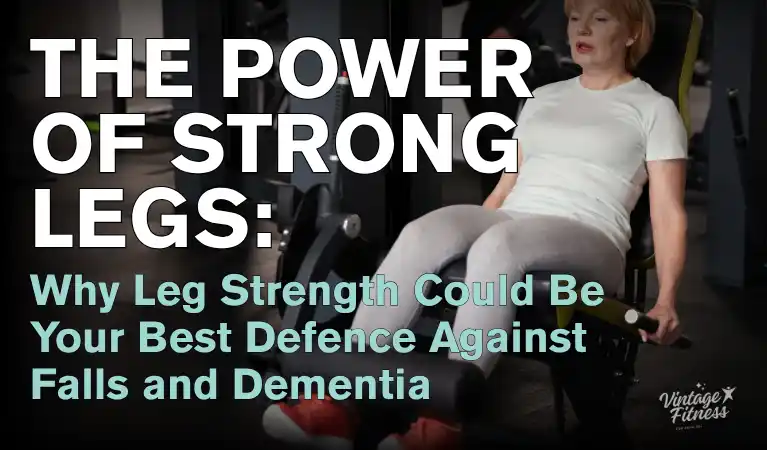
We are halfway through August, which means many of us are fitting in as much travel and leisure time as we can before things cool down again. By all means, enjoy everything summer has to offer. Just do not forget to fit in some regular strength training too. It is all about balance.
And speaking of balance, what a great segue, we often think of balance as something separate from strength. The two are actually closely connected, especially when it comes to your legs.
Good Balance Is More Than Standing Still
Balance means much more than being able to stand in one spot without wobbling. It is your body's ability to react, adjust and recover when something unexpected happens.
Maybe you step off a curb awkwardly. You trip over a small object. You slip a little on a wet surface. In that split second, your body needs to shift your weight, take a quick step and steady you.
That takes balance. It also takes strong, responsive leg muscles. Research has found that when leg strength drops, it becomes harder to generate the force you need to catch yourself when your balance is suddenly challenged.
Your Legs Do More Than You Think
Your legs are involved in almost everything you do all day long:
- Getting up from a chair
- Climbing stairs
- Walking over uneven ground
- Stepping over obstacles
- Getting in and out of a car
- Carrying groceries
- Recovering from a stumble
The stronger your legs are, the better equipped you may be to handle these everyday movements with confidence, and the less likely a small misstep is to turn into a fall. Walking is one of the easiest ways to keep these muscles active, though as we explained in is walking enough exercise for seniors, walking on its own may not build all the strength your legs need.
Strong Legs and a Healthier Brain
There is another compelling reason for older adults to keep their legs strong, and it has less to do with walking and more to do with what is happening inside the brain.
A decade-long study from researchers at King's College London followed more than 300 female twins between the ages of 43 and 73, and found an interesting connection between leg power and brain health. You can read the full study, published in the journal Gerontology, on the Karger research site.
The women who had greater leg power at the start of the study tended to hold on to their memory and thinking abilities better over the following 10 years. They also showed fewer of the brain changes we associate with ageing.
Researchers believe physical activity may help support the ageing brain by triggering the release of chemicals that benefit brain health. What makes the finding especially interesting is that the connection held up even after the researchers accounted for other lifestyle and health factors that can influence dementia risk.
This study does not prove that stronger legs cause better brain health. What it does is add to a growing body of research showing that physical fitness and brain health are closely linked.
Simple Leg Exercises to Build Strength
The good news is that you do not need a gym full of equipment to start. A few consistent, well-chosen movements can go a long way. Some of our favourites for building leg strength safely include:
- Sit-to-stands: rising from a sturdy chair and lowering back down with control
- Squats: shallow at first, using a counter or chair for support if needed
- Step-ups: onto a low, stable step
- Heel raises: rising onto your toes and lowering slowly
Start with a range of motion that feels manageable, focus on good form over speed, and build up gradually. If you have a knee, hip or balance concern, that is exactly the kind of thing a trainer can adjust the program around, much like we do when clients are rebuilding strength after an illness or surgery.
A Note for Adult Children
If you are reading this because you worry about a parent's steadiness on the stairs or their independence at home, leg strength is one of the most practical places to start. Falls are one of the biggest threats to a senior living on their own terms, and leg strength is something that can genuinely be improved at almost any age.
Helping a parent begin a safe, well-structured program is a caring, concrete step, and it does not have to feel like a big production. If you are weighing options, here is how to choose a seniors fitness provider you can trust.
Every Rep Is an Investment in Your Independence
So the next time you are working on those sit-to-stands, squats, step-ups or heel raises, remember what you are really doing. You are not just strengthening your legs. You are investing in an active, independent future.
Book a free consultation and we will build a well-rounded fitness program made just for you, at home or virtually, anywhere across the Greater Toronto Area. You can also call us at 1-866-471-0109.
For follow-along leg-strength exercises you can try at home, visit our YouTube channel.
Frequently Asked Questions
- What are the best leg exercises for seniors?
- Sit-to-stands, shallow squats, step-ups and heel raises are excellent starting points because they mirror everyday movements like rising from a chair or climbing stairs. The best choice depends on your current strength, balance and any joint concerns, which is why a personalized program often works better than a one-size-fits-all routine.
- How often should older adults train their legs?
- Most older adults do well with two to three leg-focused sessions per week, with a rest day in between so muscles can recover. Consistency matters more than intensity, especially when you are just getting started.
- Is leg strength training safe after a knee or hip surgery?
- It often is, and staying strong can support your recovery, but it should be guided. A certified trainer can adjust range of motion, support and progression around your specific history so you build strength without aggravating the joint. Always check with your doctor before beginning a new program.
- Can leg exercises really help protect against dementia?
- Research has not proven that stronger legs directly prevent dementia. Studies like the King's College London twin research do show a meaningful link between leg power and better long-term brain health, adding to strong evidence that staying physically active supports the ageing brain.
RSS Subscribe:

Search
Categories
- Abdominal / Waist Exercises
- Aches and Pains
- Aging Well
- Arm Exercises
- Arthritis
- Back exercises
- Balance for Seniors
- Core
- Diabetes
- Elastic Band Exercises
- Exercise Programs
- Fitness Goals
- Flexibility Exercises
- Guest blog
- Hands
- Heart Health
- Incontinence Exercises
- Knees
- Leg Exercises
- Mental Health
- Neck Exercises
- Nutrition
- Osteoporosis
- Other
- Personal Training
- Posture
- Sciatica
- Shoulder
- Strength Exercises
- Stretching Exercises
- Success Stories
- Virtual Training
- Webinar
- Weight Loss
- Women’s Health