Is Walking Enough Exercise for Seniors?
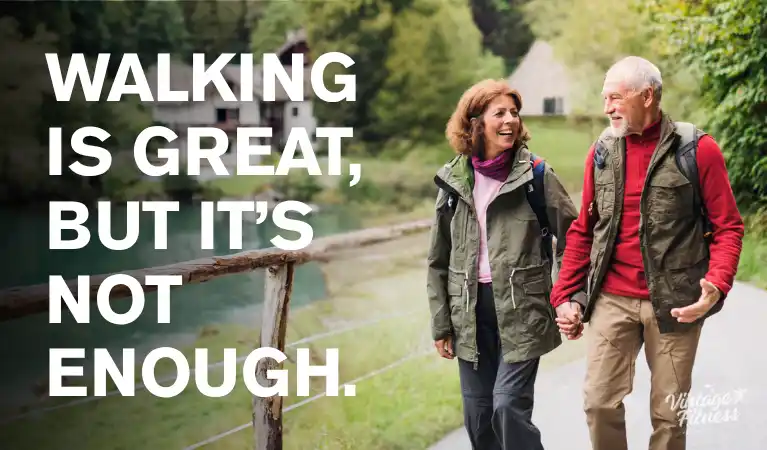
Walking is one of the best habits you can have. It is simple, accessible, great for your heart, and a wonderful way to enjoy the outdoors. At Vintage Fitness, we encourage our clients to keep walking whenever they can.
But if walking is the only exercise you are doing, you are missing some of the most important ingredients for healthy, independent aging.
What Walking Does Well
A regular walk improves cardiovascular health, boosts your mood, supports brain health, and increases your overall energy. Whether it is a loop around the block or a vigorous hike through the woods, every step counts. We have written before about the hidden benefits of that morning walk, and they are real: better sleep, better digestion, a clearer head, and time outdoors with people you enjoy.
If you want to get more out of your daily route, our top walking tips for seniors cover footwear, posture, and pacing.
So keep walking. The question is not whether walking is good. It is whether walking alone covers everything your body needs as you age. And the honest answer is no.
What Walking Misses
Walking mainly challenges your endurance. As we age, endurance is only one piece of the puzzle.
One of the biggest changes that comes with aging is the gradual loss of muscle and bone density. Doctors call the muscle part sarcopenia, but you do not need the medical term to recognize it: the grocery bags that feel heavier than they used to, the armchair that takes an extra push to get out of, the stairs you now take one at a time.
Without strength training, everyday tasks become more difficult, and in some cases, impossible. And the effects go beyond strength. When we lose muscle, we lose balance. When we become unsteady, the risk of falling and serious injury climbs dramatically. Falls are the leading cause of injury among older Canadians, and most of them happen during ordinary daily activities, not on icy sidewalks.
Bone density follows a similar story. Walking contributes to bone health because it is weight-bearing, but it is not enough stimulus on its own. Strength and resistance exercises place healthy stress on your muscles and bones at the same time, encouraging both to stay stronger. That extra stimulus is especially important for reducing the risk of osteoporosis and fractures.
Strength Is What Keeps You Independent
Think about the movements that actually keep you living on your own terms: getting out of a chair, climbing stairs, carrying groceries, gardening, getting up off the floor, picking up a grandchild. Every one of those relies on strength and balance, not just stamina.
That is the difference between the two kinds of fitness. Endurance helps you keep going. Strength helps you keep doing.
Canada's physical activity guidelines for adults 65 and older reflect this. They recommend at least 150 minutes of moderate activity per week, which your walks can cover, plus muscle-strengthening activities at least twice a week and exercises that challenge your balance.
You Do Not Need to Overhaul Anything
If you love your daily walks, keep them up. They are an important part of staying healthy. The fix is not to replace walking. It is to add a few minutes of strength, balance, and mobility work each week.
That can be as simple as:
- Sit-to-stands from a sturdy chair while the kettle boils
- Heel raises holding the kitchen counter
- Carrying your groceries a little farther before setting them down
- A few minutes of gentle resistance band work while watching the news
Small additions like these make a remarkable difference in how you move, feel, and age. Building and maintaining muscle and bone density is what keeps you capable, confident, and independent for years to come.
A Note for Adult Children and Caregivers
If your mom or dad walks every day, that is worth celebrating. It also is not the full picture. If you have noticed a parent gripping the railing harder, avoiding the stairs, or struggling to rise from a low couch, those are strength and balance signals, not just "getting older." The encouraging news is that muscle responds to training at every age, including in your 80s and 90s. A safe, gradual strength program is one of the most practical gifts you can help a parent start.
Where to Start
Our YouTube channel is full of strength training exercises designed for older adults, free to follow along at home.
And if you are ready for a fitness program built around your body, your history, and your goals, our seniors fitness specialists come to you, in your home or virtually. Contact us or call us at 1-866-471-0109 and we will help you take the first step.
Frequently Asked Questions
- Is walking enough exercise for seniors?
- Walking is excellent for heart health, mood, and energy, but it mainly builds endurance. Seniors also need strength, balance, and mobility exercises to maintain muscle, protect bone density, and reduce fall risk. Think of walking as the foundation, not the whole house.
- How often should seniors do strength training?
- Canadian physical activity guidelines recommend muscle-strengthening activities at least twice a week for adults 65 and older. Even 10 to 15 minutes per session makes a meaningful difference when done consistently.
- Can I start strength training in my 70s or 80s?
- Yes. Muscle responds to training at every age, and studies have shown strength gains in people well into their 90s. The key is starting gradually with movements suited to your current ability, ideally with guidance from a professional experienced with older adults.
- Does walking prevent osteoporosis?
- Walking helps because it is weight-bearing, but on its own it is not enough stimulus to meaningfully build bone density. Resistance training adds the healthy stress bones need to stay strong, which is why the two work best together.
Ready to get started?
If you live in the Greater Toronto Area and would like personalized help with this movement or any aspect of your fitness, our certified mobile personal trainers come directly to your home.
Request a Free Consultation Call to Speak with a Trainer: (866) 471-0109RSS Subscribe:

Search
Categories
- Abdominal / Waist Exercises
- Aches and Pains
- Aging Well
- Arm Exercises
- Arthritis
- Back exercises
- Balance for Seniors
- Core
- Diabetes
- Elastic Band Exercises
- Exercise Programs
- Fitness Goals
- Flexibility Exercises
- Guest blog
- Hands
- Heart Health
- Incontinence Exercises
- Knees
- Leg Exercises
- Mental Health
- Neck Exercises
- Nutrition
- Osteoporosis
- Other
- Personal Training
- Posture
- Sciatica
- Shoulder
- Strength Exercises
- Stretching Exercises
- Success Stories
- Virtual Training
- Webinar
- Weight Loss
- Women’s Health