Functional Fitness for Seniors: Test Your Independence
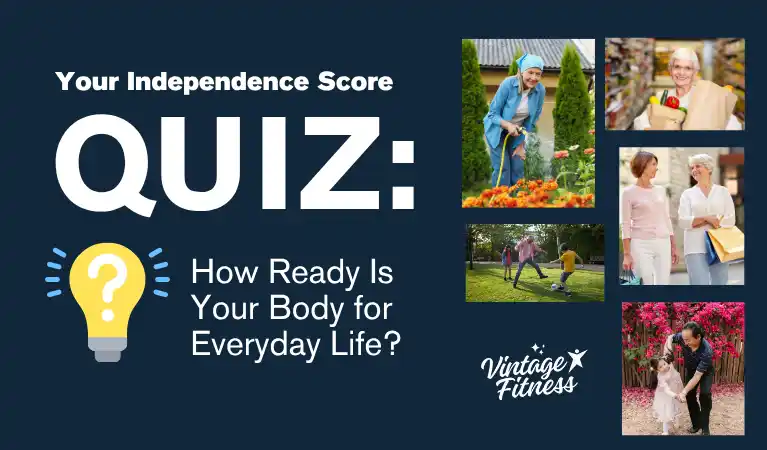
Ask most people how fit they are and they will tell you how far they can walk or when they last exercised. But the truest measure of independence is quieter than that. It shows up in the small moments: getting down to the floor to reach a pot, carrying the groceries in from the car, catching yourself when you trip on an uneven sidewalk.
Those everyday movements have a name. Fitness experts call them functional fitness, and for older adults they matter more than any number on a scale. Functional fitness for seniors is simply the strength, balance, and mobility you need to do what daily life asks of you, safely and without a second thought.
Why everyday tasks are the real test
Strength, balance, and endurance fade slowly with age, and they fade quietly. Most people do not notice until something they never thought about starts to feel harder. You reach for the railing now. You push off the armrests to stand. You plan your day around what your body can manage.
None of that means decline is set in stone. Functional fitness can be built at any age, including in your 80s and 90s. The first step is simply knowing where you stand right now.
Find your Independence Score
We built a free quiz to help you do exactly that. The Independence Score Quiz asks 10 simple questions about real everyday activities, from climbing stairs to getting up during the night. When you finish, we email you your score along with personalized comments on the abilities to focus on next.
It takes about 2 minutes, and it is a private, honest check-in with your own body. If you like knowing your numbers and tracking your progress, it gives you a clear baseline to measure against.
Worried about a parent?
If you have noticed a parent gripping the furniture, avoiding the stairs, or turning down outings that involve walking, the quiz is a gentle way to start the conversation. Send it their way, or sit down and take it together. A score gives you both something concrete to talk about, instead of a worry that never quite gets said out loud.
Whatever your score, you are not stuck with it
A high score is worth protecting. A low score is a starting point, not a verdict. Either way, the next step is the same: work on the specific everyday abilities that are giving you trouble, safely and gradually. That is exactly what our trainers do. Vintage Fitness has specialized only in older-adult fitness across Toronto and the GTA for 21 years, with in-home and virtual programs built around your goals and your ability.
Frequently Asked Questions
Can I really improve my functional fitness at my age?
Yes. Strength, balance, and mobility respond to training at every age, including in your 80s and 90s. The key is starting at the right level and building gradually.
Is the Independence Score Quiz a medical test?
No. It is a self-reflection tool for general information. If an activity feels unsafe or causes pain, stop and speak with your healthcare professional.
How long does the quiz take, and what do I get?
About 2 minutes. After you finish, we email you your Independence Score along with personalized comments on the everyday abilities to focus on.
What if my score is low?
A low score simply shows where to begin. If several everyday tasks feel difficult, check with your healthcare provider first, then consider working with a qualified older-adult fitness specialist.
Ready to see where you stand?
Take the free quiz, or if you would rather talk it through first, call us at 1-866-471-0109.
RSS Subscribe:

Search
Categories
- Abdominal / Waist Exercises
- Aches and Pains
- Aging Well
- Arm Exercises
- Arthritis
- Back exercises
- Balance for Seniors
- Core
- Diabetes
- Elastic Band Exercises
- Exercise Programs
- Fitness Goals
- Flexibility Exercises
- Guest blog
- Hands
- Heart Health
- Incontinence Exercises
- Knees
- Leg Exercises
- Mental Health
- Neck Exercises
- Nutrition
- Osteoporosis
- Other
- Personal Training
- Posture
- Sciatica
- Shoulder
- Strength Exercises
- Stretching Exercises
- Success Stories
- Virtual Training
- Webinar
- Weight Loss
- Women’s Health