Webinar Replay: Brain Health and Aging Well (How Lifestyle Affects Your Brain)
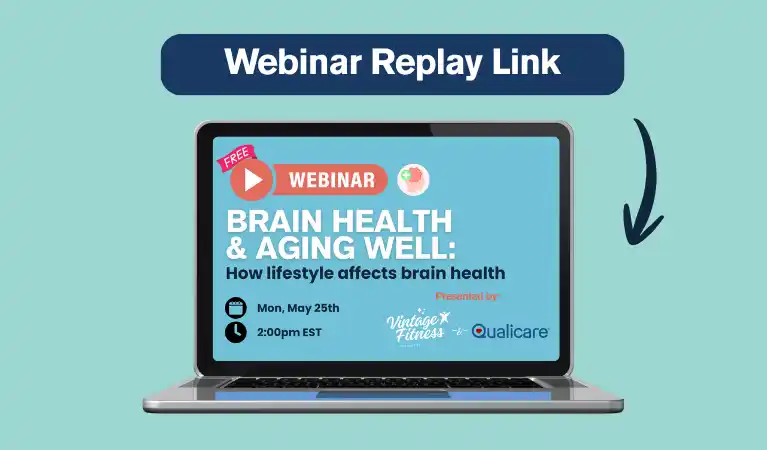
Last week we hosted one of our most-requested webinars to date. When we polled you a while back on what topic you wanted to dig into next, "brain health" came out on top. So on May 25th, we teamed up with our friends at Qualicare Home Care to deliver Brain Health and Aging Well: How Lifestyle Affects Your Brain.
If you missed it live, the full replay is waiting for you at the bottom of this post. And if you want to see what else we've covered, our complete library of past senior fitness webinars is always free to browse.
We were joined by Cindy Cashman, a registered nurse with nearly 20 years of critical care experience, now bringing her expertise to families through Qualicare Home Care. Cindy walked us through the lifestyle and medical side of brain health, while Leigh covered exercise and its remarkable impact on the brain. Here's a taste of what you'll learn in the full replay.
Takeaway 1: Up to 45% of Dementia Cases Are Linked to Things You Can Actually Change
Cindy opened with a 2024 study that identified 14 modifiable lifestyle and health factors that may help prevent dementia. The headline number is striking. Addressing these factors could prevent up to 45% of cases. That's not a small effect. That's a huge window for action.
The list includes things like physical inactivity, high blood pressure, diabetes, smoking, obesity, social isolation, and untreated hearing or vision loss. Two newer additions stood out: high LDL cholesterol and untreated vision loss. Both are very treatable, and both deserve a conversation with your doctor.
The point isn't to be perfect. It's that every small change moves the dial.
Takeaway 2: A Healthy Heart Means a Healthy Brain
One theme came up again and again. Heart health and brain health are deeply connected. Your brain needs steady oxygen and good blood flow to function well, and that depends on healthy blood vessels.
Cindy referenced the Sprint Mind study, which found that managing blood pressure more aggressively can help protect the brain, especially by lowering the risk of mild cognitive impairment. Same story with blood sugar. When it stays elevated over time it damages blood vessels, increases inflammation, and raises the risk of stroke, all of which affect cognition.
The good news is that controlling blood pressure, managing diabetes, and keeping cholesterol in check are some of the most well-supported ways to reduce dementia risk in midlife and beyond.
Takeaway 3: Strength Training Is "Miracle Growth" for Your Brain
This is where Leigh got excited. Aerobic exercise is well known for its brain benefits, but strength training has its own superpower. It raises a protein called BDNF (Brain-Derived Neurotrophic Factor), sometimes called miracle growth for the brain, which helps neurons survive, grow, and form new memories.
Leigh shared a fascinating twin study of 324 women aged 43 to 73 that found leg power predicts healthy cognitive aging and brain structure. Translation: the stronger your legs in midlife, the better your brain is likely to do as you age.
That's why we recommend a mix of aerobic activity (about 150 minutes a week of moderate intensity) plus strength training at least twice a week. Add in balance and a little cognitive challenge while you move and you're hitting the brain from every angle.
So Much More in the Full Replay
We also covered diet (hint: the MIND diet), the surprising importance of treating sleep apnea, why social connection protects memory, early warning signs of dementia, and a practical homework plan you can start this week. Press play below to watch the full session.
Want to explore other topics? Browse our full library of senior fitness webinars.
Ready to put any of this into practice with a trainer who specializes in older adults? We'd love to help.
Request a Free Consultation Call to Speak with a Trainer
Take one small step this week. Your brain will thank you.
Committed to your wellness,
Leigh
About Vintage Fitness: Since 2005, we've helped older adults improve their strength, mobility, and quality of life with customized in-home fitness programs across the Greater Toronto Area.
Frequently Asked Questions
- How much exercise do I need for brain health?
- The World Health Organization recommends at least 150 minutes a week of moderate-intensity activity, plus strength training at least twice a week. That can be broken into 10-minute sessions throughout the day. Consistency matters more than long workouts.
- Can lifestyle changes really reduce my risk of dementia?
- Yes. A 2024 study identified 14 modifiable factors that, taken together, may prevent up to 45% of dementia cases. These include managing blood pressure, treating hearing and vision loss, staying physically active, and maintaining social connections.
- Is it ever too late to start exercising for brain health?
- No. Research shows that starting a structured exercise program in your 60s, 70s, or 80s can still slow cognitive decline and reduce the risk of dementia. The benefits are real at every stage.
RSS Subscribe:

Search
Categories
- Abdominal / Waist Exercises
- Aches and Pains
- Aging Well
- Arm Exercises
- Arthritis
- Back exercises
- Balance for Seniors
- Core
- Diabetes
- Elastic Band Exercises
- Exercise Programs
- Fitness Goals
- Flexibility Exercises
- Guest blog
- Hands
- Heart Health
- Incontinence Exercises
- Knees
- Leg Exercises
- Mental Health
- Neck Exercises
- Nutrition
- Osteoporosis
- Other
- Personal Training
- Posture
- Sciatica
- Shoulder
- Strength Exercises
- Stretching Exercises
- Success Stories
- Virtual Training
- Webinar
- Weight Loss
- Women’s Health