How to build strength sitting down for seniors
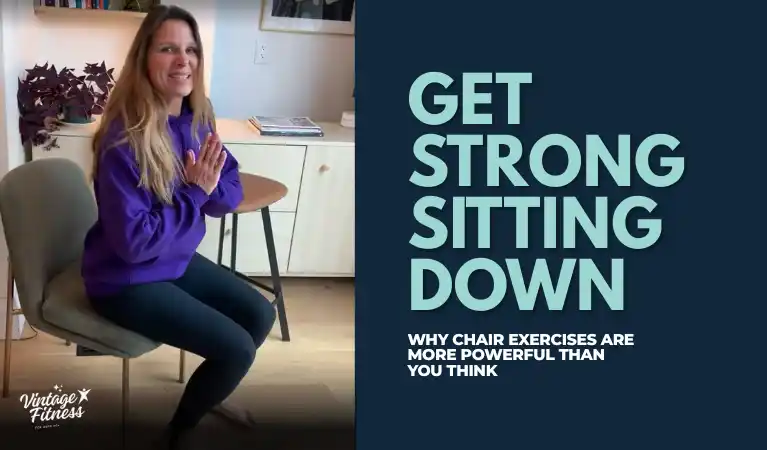
Many seniors are told to "just stretch" or "do gentle movement," especially if they have pain, balance concerns, or limited mobility. While stretching has benefits, stretching alone does not maintain muscle strength. And strength is what keeps us independent, steady, and confident as we age. So what do you do if you just don't feel steady enough to stand up and do a strength training exercise routine?
Believe it or not, learning how to build strength sitting down for seniors is not only possible but incredibly effective. You can build real strength safely from a chair, eliminating the need for floor work or equipment. And for some seniors, especially those who haven't exercised in a while (or ever!) and have limited mobility and stability, chair exercises for seniors also eliminate the fear of falling. On the surface, it may seem unlikely that one can get fit from a seated position, but trust us, you can work a lot of muscles and build a solid foundation of strength from a chair. And you don't even have to leave the comfort and familiarity of your home.
First things first: let's talk about why strength matters more than simply having a stretching routine.
Why Strength Beats Stretching Alone
Stretching is valuable in so far as it helps with flexibility and comfort, but muscle strength is what allows you to:
- Stand up from a chair
- Carry groceries
- Catch yourself if you trip
- Climb stairs
- Stay independent longer
One of the things we like to remind people of is that as we age, we naturally lose muscle each year...unless we challenge it. So let's challenge that muscle loss. And no matter how "far gone" you might think you are, you CAN start at ANY age.
Understanding how to build strength sitting down for seniors means recognizing that your body responds to resistance training regardless of whether you're standing or sitting. The key is giving your muscles the challenge they need to stay strong.
How Do We Get Stronger from a Chair?
In general, to build strength, muscles need:
- Resistance (your body weight counts!)
- Controlled movement
- A little fatigue by the last few repetitions
We can do all of those things from a seated position! Our seniors fitness trainers are experts in this very thing, so we can tailor an entire exercise routine to start you off in a chair if that's where you're at. And even if you already have good mobility and balance, strength training chair exercises for seniors can still be beneficial, and can easily be incorporated into other daily activities as a stacked habit. You can read more about Habit Stacking here.
If you're not quite ready to take the next step with a trainer, we also have an entire library of free exercise videos to get you started. We've included some of our favourite chair exercises for seniors below, so take a look and maybe try one or two to see how it feels.
Safety note: Sit tall, feet flat on the floor, and move slowly. Stop if you feel sharp pain or dizziness.
Sit-to-Stand: The Most Important Exercise
Why it works: This strengthens thighs, hips, and glutes - the muscles that prevent falls.
This is hands down the most functional exercise you can do. Every single time you get up from a chair throughout your day, you're using these exact muscles. The difference is that when you practice it as an exercise, you're building the strength to make all those daily sit-to-stands easier and safer.
The beauty of this exercise is that it meets you where you are. If you need to use your hands to push off, that's fine. As you get stronger, you'll use your hands less. Eventually, you might be able to stand up without using your hands at all. That's real, measurable progress.
How to progress:
- Start with just 3-5 repetitions
- Use your hands on the armrests or seat as much as you need
- As you get stronger, use your hands less
- Work up to 10-15 repetitions without hand support
- For an extra challenge, slow down the movement (especially the sitting back down part)
Seated Leg Extensions
Why it works: This targets the front of the thighs - essential for walking and standing.
Your quadriceps (the muscles on the front of your thighs) do a lot of heavy lifting in daily life. They help you stand up, walk, climb stairs, and maintain your balance. When these muscles are weak, everything becomes harder and riskier.
The seated leg extension lets you strengthen these muscles safely while supported in a chair. You're working against gravity, which provides resistance without needing any equipment.
How to progress:
- Start with 5-8 repetitions on each leg
- Focus on straightening your leg fully at the top
- Hold the extended position for 1-2 seconds
- Lower your foot back down slowly and with control
- Work up to 10-15 repetitions on each leg
- For more challenge, add an ankle weight or pause longer at the top
Seated Hip Strengthening
Why it works: This strengthens hips and improves balance and gait.
Your hip muscles are crucial for balance and walking. When your hip muscles are weak, your gait becomes unsteady and your fall risk increases. Strong hips mean better stability on your feet and more confidence in your movement.
This exercise works the muscles on the sides of your hips, which help keep you stable when you're standing on one leg (which you do with every step you take when walking).
How to progress:
- Start with 5-8 repetitions on each leg
- Keep your toes pointing forward (not turning out)
- Lift your leg out to the side as far as comfortable
- Lower slowly and with control
- Work up to 10-15 repetitions on each leg
- For more challenge, add an ankle weight or hold the lifted position longer
Creating Your Chair Exercise Routine
Now that you know these three foundational exercises, how do you put them together into a routine?
Start simple. Pick just one exercise and do it three times this week. That's it. Get comfortable with the movement. Learn how your body responds. Notice how you feel the next day.
Once one exercise feels manageable, add a second. Then a third. Eventually, you can do all three in one session. That might look like:
- Sit-to-stands: 10 repetitions
- Seated leg extensions: 10 on each leg
- Seated hip strengthening: 10 on each leg
- Rest 1-2 minutes
- Repeat the whole sequence 1-2 more times
This entire routine takes maybe 10-15 minutes. That's all. But when done consistently (aim for 3-4 times per week), these exercises can build strength, improve balance, reduce fall risk, increase confidence and support independence.
Why Consistency Matters More Than Intensity
You don't need to work out until you're exhausted. You don't need to feel sore for days afterward. You just need to challenge your muscles a little bit, regularly.
Think of it like saving money. Small deposits made consistently compound over time into something significant. Exercise works the same way. Ten minutes three times a week adds up to real strength gains over months.
The seniors who see the best results aren't the ones who go hard once and then quit. They're the ones who show up consistently, even when they don't feel like it, even when the progress feels slow. Because progress is happening, even when you can't see it day-to-day.
Your muscles are adapting. Your balance is improving. Your confidence is growing. Trust the process.
When Chair Exercises Aren't Enough (In a Good Way)
Here's a great problem to have: what do you do when chair exercises for seniors start feeling too easy?
This is success. This means you've built strength. Your body has adapted. Now it's time to progress.
You might add light ankle weights. You might slow down the movements. You might increase repetitions. Or you might start incorporating some standing exercises, using the chair for support initially.
This is where working with a trainer becomes valuable. We can assess your progress and design the next phase of your program. We can challenge you appropriately without overdoing it.
But even if you never progress beyond chair exercises, that's okay too. The goal isn't to become an athlete. The goal is to maintain (or regain) the strength you need to live your life the way you want to live it.
Getting Started Today
If you're reading this and thinking "I should try this," stop thinking and start doing. Right now. Stand up from whatever you're sitting on and sit back down. That's one sit-to-stand. You just did your first repetition.
Do two more. Now you've done three. That's enough for day one.
Tomorrow, do five. The day after that, try the leg extensions. Small steps. Consistent action. That's how you build strength sitting down.
And if you want guidance, if you want someone to make sure you're doing these exercises correctly, if you need accountability or modifications for your specific situation, that's exactly what we do at Vintage Fitness. We work with seniors exactly where they are and help them get stronger safely.
Ready to build real strength from the comfort of your chair?
Book a Free Consultation
and let our trainers create a personalized chair exercise program for you.
Want to see what others have achieved?
Read our Success Stories
from seniors who've regained their strength and independence through consistent training.
Give these exercises a try and see if you can progress to 10-15 minutes per day, 3 or 4 times per week. It may not sound like a huge commitment, but when done correctly, these exercises can build strength, improve balance, reduce fall risk, increase confidence and support independence.
And as always, consistency matters more than intensity.
Leigh
About Vintage Fitness: Since 2005, we’ve helped older adults improve their strength, mobility, and quality of life with customized in-home fitness program
Disclaimer
The information provided in this article is for educational purposes only and is not intended as medical advice. Always consult with your healthcare provider before beginning any new exercise program, especially if you have existing health conditions, chronic pain, or concerns about your physical capabilities. The exercises described here are generally safe for most seniors, but individual circumstances vary. Stop any movement that causes pain or discomfort. If you experience chest pain, severe shortness of breath, dizziness, or other concerning symptoms during travel, seek medical attention immediately.
RSS Subscribe:

Search
Categories
- Abdominal / Waist Exercises
- Aches and Pains
- Aging Well
- Arm Exercises
- Arthritis
- Back exercises
- Balance for Seniors
- Core
- Diabetes
- Elastic Band Exercises
- Exercise Programs
- Fitness Goals
- Flexibility Exercises
- Guest blog
- Hands
- Heart Health
- Incontinence Exercises
- Knees
- Leg Exercises
- Mental Health
- Neck Exercises
- Nutrition
- Osteoporosis
- Other
- Personal Training
- Posture
- Sciatica
- Shoulder
- Strength Exercises
- Stretching Exercises
- Success Stories
- Virtual Training
- Webinar
- Weight Loss
- Women’s Health