Exercise Habit Stacking for Seniors: Building Strength Without the Gym
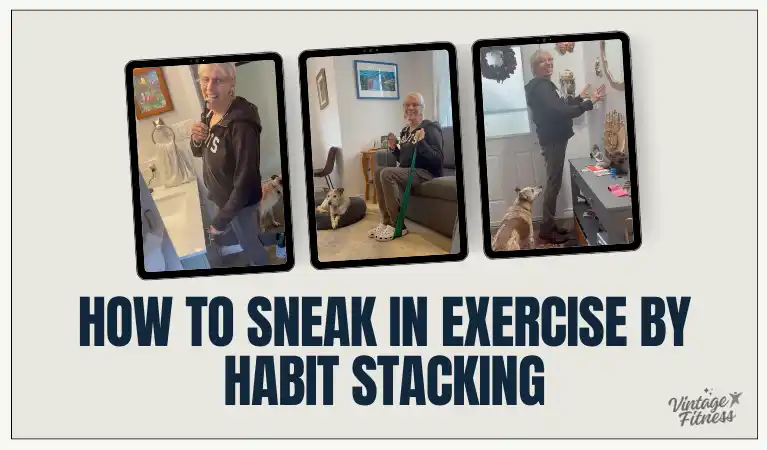
Don't tell anyone, but I have a confession to make. I don't love working out.
I know, I know...I'm a personal trainer. Shouldn't I be looking forward to every workout, every day?! The truth is, like you, most days I would much rather be taking it easy, having a coffee date with my bestie, or doing any number of low-key, pleasurable activities. Workouts are just that: work! They're rewarding, satisfying, and they help us achieve goals like strength, mobility, increased energy and independence. But they also take time, effort and discipline, and some days we don't have much left in the tank for that. That's why I'm such a big believer in exercise habit stacking for seniors. It's a way to build strength without needing gym memberships or massive chunks of time.
But know that you're not alone. We all feel this way some of the time, and we all feel guilty (and maybe even a little ashamed) when we skip our workouts. And this is where strategies come in.
Last time we talked about skipping the big, bold New Year's resolutions and implementing small, sustainable habits instead. Doing a little bit every day will lead to significant results in the long term. Going all-out at first then fizzling like a New Year's sparkler isn't going to get us closer to our goals, and in fact just makes us feel crummy and less likely to get back on the exercise wagon.
So to help you with this, I'm going to give you more 'Habit Stacking' ideas. It's simple and easy to implement but it can make all the difference.
Here's a Habit Stacking Refresher
Exercise habit stacking for seniors is one of the smartest approaches to fitness because it works with your existing routine instead of against it. Attach the activity to something you already do. It's one of the most effective behavior change strategies out there. What happens is, the existing habit (like brushing your teeth) becomes your trigger for the new one.
To help you get started, here is a video demonstrating some common (and easy!) habit stacking exercises:
Five Simple Habit Stacks You Can Start Today:
- Alarm goes off: Do stretches
- Boiling kettle: Wall or counter push-ups
- Brushing teeth: Balance on one leg
- Watching TV: Exercise band exercises
- Put on shoes: Do calf raises
Give one or two of these a try for the next week, and see how quickly a good habit can form!
Why Exercise Habit Stacking Works So Well for Seniors
The beauty of habit stacking is that you're not trying to create time out of thin air. You're not adding another item to your already-full to-do list. Instead, you're piggybacking on routines you already have. This is why exercise habit stacking for seniors is so effective compared to traditional workout programs.
Think about how automatic some of your daily habits are. You don't have to remind yourself to make coffee in the morning or brush your teeth before bed. Your brain has created neural pathways that make these actions almost effortless. When you stack a new exercise habit onto an existing one, you're borrowing that automatic trigger. Your brain learns: "When I do X, I also do Y."
For older adults, this approach has some specific advantages. You don't need to remember to exercise at a specific time. You don't need to set reminders or put it on your calendar. The activity you're already doing becomes your reminder. This takes a huge mental load off your plate.
The Best Times to Stack Exercise Habits
Some parts of your day are better suited for habit stacking than others. Here are the routines that work particularly well:
Morning routines are golden opportunities. Most of us follow a pretty consistent pattern when we wake up. Whether it's turning off your alarm, making coffee, or getting dressed, these predictable moments are perfect triggers for movement. The added bonus? Morning exercise can give you energy for the day ahead.
Waiting time is another great opportunity. Any time you're standing around waiting for something (the kettle to boil, the microwave to beep, your computer to start up), you can sneak in some movement. These little pockets of time add up quickly.
TV time is probably the easiest place to start for most people. If you watch television regularly, you already have built-in exercise time. Commercials are perfect for getting up and moving. Or keep some resistance bands by your chair and use them while you watch.
Transition moments throughout the day also work well. When you get out of bed, before you sit down to eat, after you use the bathroom. These natural breaks in your routine are ideal spots to insert a quick exercise.
Starting Small is the Secret
Here's what usually happens when people try to add exercise to their routine: they get enthusiastic and try to do too much. They decide they're going to do a full strength workout every morning or walk for an hour after dinner. And it works for a few days. Maybe even a week or two. Then life gets in the way, they miss a day, feel guilty, and the whole thing falls apart.
Habit stacking works differently. You start absurdly small. So small that you can't not do it. So small that even on your worst day, you can still show up.
One leg balance while you brush your teeth? That's 30 seconds, twice a day. You're already brushing your teeth anyway. Five wall push-ups while the coffee brews? Takes maybe 20 seconds. You're standing there waiting anyway.
These tiny habits might seem like they won't make a difference. But here's the thing: they build the pattern of showing up. They prove to yourself that you're someone who exercises. And once that identity is established, once the habit feels automatic, then you can add more if you want to.
My Personal Habit Stacks
Since I'm being honest about not loving workouts, let me share the habit stacks that actually work for me.
When I wake up and my feet hit the floor, I do 10 ankle circles in each direction. Still in bed. Takes 30 seconds. This wakes up my feet and ankles and gets a little blood flowing before I stand up.
While my coffee brews, I do wall push-ups. I started with five. Now I do 15. But on days when I'm tired or rushed, I do five and call it good. The point is consistency, not perfection.
While I brush my teeth (morning and night), I practice standing on one leg. This has genuinely improved my balance over time. And it's become so automatic that I feel weird if I don't do it.
When I sit down to check my email in the morning, I do three big shoulder rolls backward and three forward. It counteracts all the hunching I'm about to do at the computer.
Before bed, when I'm already on the floor playing with my dog, I do some stretching. Hip flexor stretches, hamstring stretches, whatever feels tight that day. The dog thinks this is part of playtime, so it's actually fun.
None of these are intense workouts. But together, they add up to meaningful movement throughout my day. And because they're attached to things I do anyway, they happen automatically. I don't have to psyche myself up or find motivation. I just do them.
Troubleshooting Common Habit Stacking Problems
Sometimes habit stacking doesn't work quite as smoothly as we'd like. Here are the most common issues and how to fix them.
Problem: You forget to do the new habit. This usually means the existing habit isn't automatic enough yet, or the two habits aren't clearly linked in your mind. Solution: Write it down. Put a sticky note where you'll see it. "When I turn on the kettle, I do wall push-ups." After a week or two, you won't need the reminder.
Problem: The exercise feels too hard. You're trying to do too much. Scale it back dramatically. Instead of 10 push-ups, do three. Instead of balancing for 30 seconds, do 10. Make it so easy that you can't fail. You can always add more later.
Problem: Your schedule is inconsistent. Pick habits that happen every single day, no matter what. Brushing teeth, making coffee, putting on shoes. Avoid trying to stack onto activities that only happen sometimes.
Problem: You feel silly doing exercises in random places. This is real, especially if you live with others or have people around. Start with the private moments. The bathroom when you brush your teeth. Your bedroom when you wake up. Once the habit is solid, you probably won't care who sees you. But start where you're comfortable.
Building on Your Foundation
Once you've got one or two habit stacks running on autopilot, you can consider adding more. But be patient with yourself. Research shows it takes anywhere from 18 to 254 days for a behavior to become automatic, with the average being about 66 days. That's over two months.
Don't rush it. Let each habit stack become truly automatic before you add another one. You'll know it's automatic when you do it without thinking, when it feels weird not to do it.
When you do add more, keep following the same principles. Attach it to something you already do. Make it absurdly easy. Do it consistently. That's the whole formula.
The Bigger Picture
Here's what I want you to understand: moving your body doesn't have to look like a formal workout. It doesn't have to happen at a gym or involve special equipment or take a big chunk of your day.
Every time you do a wall push-up while waiting for the kettle. Every time you balance on one leg while brushing your teeth. Every time you do calf raises while putting on your shoes. You're building strength. You're improving balance. You're maintaining mobility. You're investing in your ability to stay independent and active.
And you're doing it in a way that actually fits into your real life. Not your fantasy life where you have unlimited time and motivation. Your actual, busy, sometimes exhausting real life.
That's what makes this sustainable. That's what makes it last.
Frequently Asked Questions
- How many habit stacks should I do?
- Start with one. Just one. Get that dialed in so it's completely automatic, then add another if you want. Most people can comfortably maintain three to five habit stacks throughout the day. More than that and it starts to feel like work instead of just part of your routine.
- What if I miss a day?
- No problem. Just start again the next day. Don't waste energy feeling guilty or deciding you've failed. One missed day doesn't matter. What matters is getting back to it the next day. The whole point of habit stacking is that it's easy to restart because it's attached to something you do anyway.
- Can I change the exercise part while keeping the same trigger?
- Absolutely. The trigger (like brushing your teeth) should stay consistent. But you can rotate through different exercises if you want variety. Just make sure you pick one exercise for each session so you're not spending mental energy deciding what to do.
- What if the existing habit doesn't happen at the same time every day?
- That's fine. Habit stacking doesn't depend on specific times. It depends on the sequence. Whether you brush your teeth at 7 AM or 9 AM doesn't matter. The connection is "when I brush my teeth, I balance on one leg," not "at 7 AM, I balance on one leg."
- Should I do the exercise before or after the trigger habit?
- Usually after works better. Finish the thing you always do, then do the new thing. That way, the completion of the first action becomes the signal to start the second. But if before works better for you, that's fine too.
- What if I physically can't do one of these exercises?
- Pick a different one. The specific exercises don't matter. What matters is the stacking principle. If you can't balance on one leg, do heel raises instead. If you can't do wall push-ups, do shoulder rolls. Choose movements that work for your body.
- How long should each exercise take?
- Aim for under a minute. Thirty seconds is even better. You're not trying to get a workout in. You're building a habit. Short is better because it's easier to maintain consistency.
Ready to Stack Your Habits?
You don't need to completely overhaul your life to get stronger and maintain your mobility. You just need to be a little bit clever about using the time you already have. Exercise habit stacking for seniors makes fitness accessible, sustainable, and actually enjoyable.
Pick one trigger. Pick one simple exercise. Do them together every day for a week. That's all.
If you need help figuring out which exercises would work best for your body and your goals, that's what we do at Vintage Fitness. We help older adults build sustainable fitness routines that fit their lives and their limitations.
Struggling to find exercises that work for your specific needs?
Book a Free Consultation
and let our trainers help you design habit stacks that actually fit your routine.
Want to see how others have used small habits to create big changes?
Read our Success Stories
and get inspired by real results from people just like you.
Start small. Stack smart. Build strength without the gym.
RSS Subscribe:

Search
Categories
- Abdominal / Waist Exercises
- Aches and Pains
- Aging Well
- Arm Exercises
- Arthritis
- Back exercises
- Balance for Seniors
- Core
- Diabetes
- Elastic Band Exercises
- Exercise Programs
- Fitness Goals
- Flexibility Exercises
- Guest blog
- Hands
- Heart Health
- Incontinence Exercises
- Knees
- Leg Exercises
- Mental Health
- Neck Exercises
- Nutrition
- Osteoporosis
- Other
- Personal Training
- Posture
- Sciatica
- Shoulder
- Strength Exercises
- Stretching Exercises
- Success Stories
- Virtual Training
- Webinar
- Weight Loss
- Women’s Health