Fitness Goals for Seniors: Skip Resolutions and Build Small Daily Habits
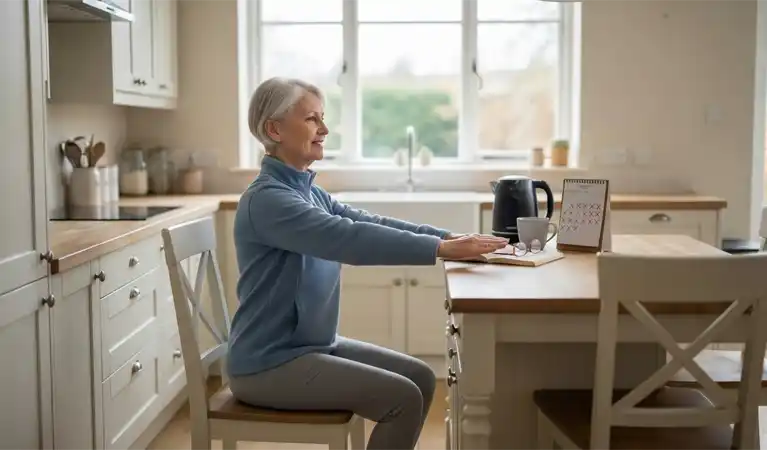
Every January, seniors set ambitious fitness goals with the best intentions. You're going to exercise five days a week, lose 20 pounds, and completely transform your life. And by February? Those fitness resolutions are a distant memory, leaving you feeling discouraged and like you've failed before you even really started.
Here's the thing: it's not you. It's the approach.
New Year's resolutions set you up for an all-or-nothing mindset that rarely works for anyone, and especially doesn't work well for older adults who are dealing with real physical limitations, energy fluctuations, and decades of ingrained habits. The pressure to make dramatic changes overnight is exhausting and unrealistic.
So this year, skip the resolutions entirely. Instead, commit to one small daily habit. Just one. Something so simple and achievable that you can't talk yourself out of it, even on your worst days.
Why Small Habits Work Better for Seniors
There's real science behind why small, consistent habits are more effective than big, dramatic resolutions. It comes down to how our brains are wired and how behavior change actually works.
When you commit to something small, you remove the barriers that usually derail you. You don't need special equipment, you don't need to carve out an hour from your day, and you don't need to feel motivated or energized. You just need to show up and do the thing.
That consistency builds something more valuable than muscle or cardiovascular fitness (though those will come too). It builds your belief in yourself to follow through. Every single day you keep your commitment, you're proving to yourself that you're someone who does what they say they're going to do. That's powerful.
After you've stuck with your small habit for a while, you'll start to feel the results of that discipline in your spirit. Not just in your body, though you'll notice changes there too. You'll feel more capable, more confident, more in control. That feeling becomes the foundation for your next small step, and then the next one after that.
What Makes a Good Small Daily Habit?
The best small habit is one that's so easy you almost can't fail. We're talking about something that takes less than five minutes and requires minimal effort or equipment.
Here are some examples that work well for seniors:
Five minutes of gentle stretching when you wake up. Before you even leave your bedroom, spend five minutes moving your body. Neck rolls, shoulder shrugs, ankle circles. Nothing complicated. Just waking up your muscles and joints.
A short walk around your home or neighborhood. It doesn't have to be a mile. It can be once around the block or even just to the end of your driveway and back. The distance doesn't matter. Showing up matters.
Ten repetitions of a single strength exercise. Pick one move. Wall push-ups, sit-to-stands from a chair, standing marches in place. Do ten of them. That's it. Ten takes less than two minutes.
Three deep breathing exercises before meals. Breathing work improves your lung capacity, reduces stress, and helps with balance. Three intentional breaths before each meal means you're practicing nine times a day without even thinking about it.
Balance practice while you brush your teeth. Stand on one foot for 30 seconds while you brush. Switch feet. You're already brushing your teeth anyway, so you're just adding a balance challenge to something you do twice a day.
Notice what all these habits have in common? They're specific, they're measurable, and they're ridiculously achievable. You're not committing to "exercise more" or "get in shape." You're committing to one concrete action that takes less time than making your morning coffee.
How to Actually Stick With Your Small Habit
Choosing the habit is the easy part. The real challenge is doing it every single day until it becomes automatic. Here's how to set yourself up for success.
Attach it to something you already do. This is called habit stacking, and it's one of the most effective behavior change strategies out there. If you're going to do your stretches, do them right after you turn off your alarm. If you're going to do your wall push-ups, do them while you wait for your coffee to brew. The existing habit becomes your trigger for the new one.
Make it absurdly easy. If you think five minutes of stretching might be too much some days, make your minimum commitment 60 seconds. If a walk around the block feels like too much, commit to walking to your mailbox. The goal is to never have an excuse that's bigger than the habit. On your worst day, you can still do 60 seconds of stretching.
Track it somehow. This doesn't have to be fancy. A paper calendar with check marks works perfectly. Seeing that chain of consecutive days builds momentum. You won't want to break the streak.
Celebrate the consistency, not the results. Your win isn't losing weight or getting stronger (though those will happen). Your win is keeping your commitment. Every single day you do your habit is a success, regardless of how you feel or what else is happening in your life.
Don't try to do more until the habit is automatic. This is the hardest part for achievers. You'll be tempted to add more exercises or go for longer walks. Resist that urge for at least a month. Let the habit become so ingrained that you do it without thinking. Once it's truly automatic, then you can build on it.
The Compound Effect of Small Steps
Here's what happens when you commit to a small daily habit for a full year.
Let's say you choose five minutes of stretching every morning. That's 35 minutes a week. Over a year, that's 1,825 minutes of stretching, which is more than 30 hours. Thirty hours of movement you wouldn't have done if you'd set a big resolution and quit by February.
But the real magic isn't in the numbers. It's in who you become through the process.
After a few weeks of stretching every morning, you'll notice you're moving more easily. So you might add a short walk a few times a week. Not because you have to, but because you want to. Because you feel better when you move.
After a couple of months, you might try that strength exercise you've been thinking about. Just one exercise, just like you did with the stretching. And because you've already proven to yourself that you can stick with a daily habit, this one sticks too.
Six months in, your "small" daily habit might have grown into a fuller routine. But it won't feel like you're forcing yourself to exercise. It'll feel natural because you built it gradually, one small step at a time, in a way your body and mind could actually sustain.
That's the compound effect. Small actions, repeated consistently over time, create results that big dramatic changes almost never do.
Start Where You Are Right Now
You don't need to wait until January 1st to start a new habit. In fact, don't wait. The best time to start is right now, wherever you are in your day.
Pick one small thing. The smallest thing you can think of that moves you toward better health and fitness. Make it so easy that you have no excuse not to do it. Then do it today. And tomorrow. And the day after that.
Don't worry about next week or next month. Just focus on today. Can you do this one small thing today? Yes, you can. So do it.
If you miss a day, don't spiral. Don't decide you've failed and give up. Just start again the next day. The streak isn't what matters. The pattern of showing up matters. Over time, those show-ups add up to something significant.
This is how real, lasting change happens. Not through dramatic New Year's resolutions that fizzle out by Valentine's Day. But through small, consistent actions that build your capability, your confidence, and your belief in yourself.
You don't need a complete transformation in 2026. You just need one small habit that you can stick with. Start there. Build from there. Trust the process.
Frequently Asked Questions
- What if I can't think of a small enough habit to start with?
- If you're struggling to choose a habit because everything seems too hard, go even smaller. Literally one minute of movement counts. One stretch. Three deep breaths. The point isn't to get a workout in. The point is to prove to yourself that you can keep a commitment. Once you've done that for a few weeks, everything else gets easier.
- How long does it take for a habit to become automatic?
- The popular answer is 21 days, but research shows it varies widely depending on the person and the habit. For some people and some habits, it can take two months or more. Don't worry about the timeline. Just focus on today. Eventually, you'll realize you're doing your habit without even thinking about it, and that's when you know it's automatic.
- What if I'm already exercising regularly? Is this advice still relevant?
- Absolutely. If you're already active, think about what small habit would enhance what you're doing. Maybe it's a daily mobility routine to complement your strength training. Maybe it's consistent balance work to reduce your fall risk. Or maybe it's something completely different, like drinking more water or getting to bed earlier. Small habits work for everyone, regardless of fitness level.
- Should I tell people about my habit or keep it to myself?
- There's no right answer here. Some people find that telling others creates accountability. Other people find that talking about their goals uses up the mental energy they need to actually do them. Try it both ways and see what works better for you. What matters is that you do the habit, not whether other people know about it.
- What if my small habit feels too easy and I'm not seeing results?
- Good. It should feel easy. That's the point. Remember, you're not trying to see physical results in the first few weeks. You're building the habit of showing up. You're building your belief in your ability to follow through. Those are the results that matter right now. The physical changes will come later, after the habit is solid.
- Can I have more than one small daily habit?
- You can, but I'd strongly recommend starting with just one until it's completely automatic. Most people who try to change multiple habits at once end up changing none of them. It's better to nail one habit and then add another than to half-commit to several and lose all of them. Be patient. One at a time.
- What happens if I miss a day?
- Nothing catastrophic, I promise. Just start again the next day. Don't waste energy beating yourself up or deciding you've failed. You haven't. You just had an off day. The important thing is to get back on track immediately. One missed day doesn't break a habit unless you let it.
Your Next Small Step
The new year isn't about reinventing yourself. It's about becoming a slightly better version of who you already are, one small choice at a time.
So forget the big resolutions. Forget the dramatic transformations. Forget the all-or-nothing thinking that's never worked before and won't work now.
Instead, choose one small daily habit. Something simple and achievable. Something you can do even on your worst day. Commit to it. Show up for it. Let it build your belief in yourself.
That's how real change happens. That's how you create a fitness routine that actually lasts. Not through willpower and motivation, which are temporary. But through small, consistent actions that become part of who you are.
If you need help figuring out what small habit would work best for your body and your goals, that's exactly what we do at Vintage Fitness. We help older adults build sustainable fitness routines that fit their lives and their limitations. We start small. We build gradually. We make it last.
Struggling to find a habit that sticks?
Book a Free Consultation
and let our trainers help you design an 'easy' starting point.
Want to see how others started small?
Read our Success Stories
and see how regular exercise has changed their lives.
Ready to start? Your small habit is waiting. Pick one thing. Do it today. Then do it again tomorrow. That's all you need to begin.
Happy New Year,
Leigh
About Vintage Fitness: Since 2005, we've helped older adults improve their strength, mobility, and quality of life with customized in-home fitness programs.
RSS Subscribe:

Search
Categories
- Abdominal / Waist Exercises
- Aches and Pains
- Aging Well
- Arm Exercises
- Arthritis
- Back exercises
- Balance for Seniors
- Core
- Diabetes
- Elastic Band Exercises
- Exercise Programs
- Fitness Goals
- Flexibility Exercises
- Guest blog
- Hands
- Heart Health
- Incontinence Exercises
- Knees
- Leg Exercises
- Mental Health
- Neck Exercises
- Nutrition
- Osteoporosis
- Other
- Personal Training
- Posture
- Sciatica
- Shoulder
- Strength Exercises
- Stretching Exercises
- Success Stories
- Virtual Training
- Webinar
- Weight Loss
- Women’s Health