Rotational Exercises for Seniors: Improve Balance and Mobility
Think about how many times you twist and turn throughout your day. Reaching for items in your grocery cart. Checking your blind spot while driving. Putting away dishes in the cupboard. Even vacuuming your living room. All of these everyday activities require your body to rotate smoothly and safely.
For many older adults, these twisting movements become increasingly challenging. You might notice your range of motion isn't what it used to be, or you feel unsteady when you turn your body. Perhaps you've started compensating by moving your entire body instead of just rotating your torso. These are common changes that happen as we age, but they don't have to limit your independence.
The good news is that rotational mobility can be improved at any age. With the right exercises, you can restore confidence in your movements and reduce your risk of falls during twisting activities.
Why Rotational Movement Matters for Seniors
Rotation is one of the most functional movements your body performs. Unlike forward and backward movements, rotation engages muscles throughout your core, hips, and spine in a coordinated pattern. When this ability diminishes, daily life becomes more difficult and potentially dangerous.
Many seniors develop what we call "en bloc" turning, where you move your whole body as one unit instead of rotating through your spine. This often happens because of reduced flexibility, weakened core muscles, or a fear of losing balance. While it might feel safer, this pattern actually increases fall risk because it's slower and less stable than proper rotation.
The rotational squat and reach exercise addresses all three components you need for safe twisting: flexibility through your spine and hips, strength in your legs and core, and balance control during the movement. By practicing this combination regularly, you're training your body to handle the exact movements you need throughout your day.
How to Perform the Rotational Squat & Reach
This exercise might look complex, but it breaks down into manageable steps. Start slowly and focus on your form rather than speed or repetitions.
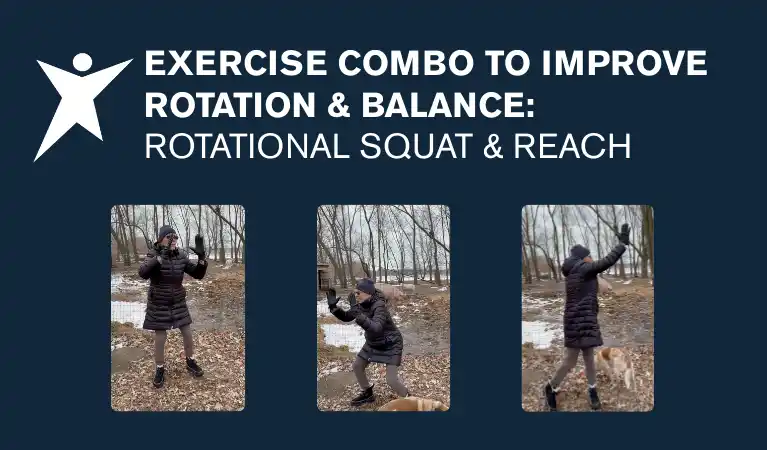
Watch Yvette demonstrate the complete exercise, then follow the detailed breakdown below:
Starting Position
Stand with your feet pointing straight ahead, positioned about shoulder-width apart. Keep your arms bent at the elbows with your palms facing each other in front of your chest. This arm position helps you maintain balance and gives you a reference point for your body alignment.
The Squat Phase
Step your right foot out to the side so your feet form a wide "L" shape. Your right foot should point slightly outward while your left foot stays forward. Bend your knees and press your hips back into a gentle squat. Think about sitting back into a chair rather than dropping straight down. You don't need to squat deeply. A small bend is perfectly effective and safer for most beginners.
Return to Center
Slowly straighten your legs and bring your right foot back to the starting position. Take a moment to feel balanced and stable before moving to the next part.
The Reach Phase
Lift your left heel off the ground and pivot on the ball of your left foot. As you pivot, gently twist your torso to the left while reaching your left hand toward the ceiling. Your eyes should follow your hand. This combination of pivoting and reaching creates the rotational movement. Keep the motion smooth and controlled.
Complete the Sequence
Return to your starting position with both feet flat and pointing forward. That's one complete repetition. Perform 10 repetitions on this side, then switch directions (stepping left and reaching right) for another set of 10.
Important Modifications
If balance is a concern, perform this exercise near a wall or sturdy chair. You can also reduce the width of your stance or the depth of your squat. The reaching phase can be modified by reaching only to shoulder height instead of toward the ceiling.
What Makes This Exercise So Effective
The rotational squat and reach works multiple systems simultaneously, which is why it's so beneficial for functional fitness.
Core Stability
Your abdominal and back muscles work hard to control the twisting motion. This strengthens the "pillar" of your body that supports nearly every movement you make. A strong core means better posture, less back pain, and more confident movement.
Hip and Spine Mobility
The squatting and rotating components gently take your joints through their full range of motion. Regular practice can help restore flexibility that you might have lost over the years. Improved mobility makes everything from tying your shoes to getting in and out of cars easier.
Balance Training
The pivoting action challenges your balance system in a controlled way. Your body learns to stay stable even when your base of support changes. This translates directly to better balance when you're turning to answer the door or looking over your shoulder.
Leg Strength
The squat portion builds strength in your quadriceps, hamstrings, and glutes. These are the same muscles that help you stand up from chairs, climb stairs, and recover if you start to lose your balance. Stronger legs are one of the best protections against falls.
Getting Started Safely
Before you try this exercise for the first time, consider a few safety guidelines. If you have any existing injuries, recent surgeries, or chronic conditions affecting your joints or balance, talk with your doctor or physiotherapist first. They can help you determine if modifications are needed.
Start with just one set of 10 repetitions on each side. You can gradually increase to two or three sets as the movement becomes more comfortable. Practice every other day rather than daily to give your muscles time to recover and adapt.
Pay attention to how your body feels during and after the exercise. Some muscle fatigue is normal and expected. Sharp pain, dizziness, or lasting discomfort are signs to stop and consult a professional. There's a difference between challenging yourself and pushing too hard.
Many seniors find it helpful to practice in front of a mirror initially. This lets you check your form and ensure you're moving symmetrically on both sides. You might also consider working with a personal trainer for your first few sessions to establish proper technique.
Frequently Asked Questions
How long will it take to see improvements in my rotation and balance?
Most people notice some improvement within two to three weeks of consistent practice. You might first notice that the exercise itself feels easier, or that everyday activities requiring rotation feel smoother. Significant improvements in balance and flexibility typically develop over six to eight weeks.
Can I do this exercise if I have arthritis in my knees or hips?
Many people with arthritis can perform this exercise with modifications. Try a narrower stance and a shallower squat to reduce joint stress. The gentle rotation can actually help maintain joint mobility. However, always check with your healthcare provider about exercises appropriate for your specific condition.
What if I can't balance well enough to do the reaching portion?
Start by mastering just the squat portion while holding onto a chair or countertop. Once that feels stable, add a small pivot without lifting your heel. Gradually progress to the full reach as your confidence grows. There's no rush. Building a solid foundation is more important than doing the complete exercise right away.
How wide should my stance be during the squat?
Your feet should be wide enough that you can comfortably squat without your knees extending past your toes, but not so wide that you feel unstable. For most people, this is slightly wider than shoulder-width. Experiment to find what feels stable and allows good squat depth for your body.
Should I feel this exercise in my back?
You should feel your core muscles working, but you shouldn't feel strain or pain in your back. If you do, you might be twisting too far or too quickly. Reduce your range of motion and focus on keeping your core engaged throughout the movement. A personal trainer can help you identify if your form needs adjustment.
Can I do this exercise if I've had a hip or knee replacement?
This depends on how long ago your surgery was and how well you've recovered. Most people can safely perform this exercise after they've completed their post-surgical rehabilitation program. Ask your surgeon or physiotherapist for specific guidance based on your surgical approach and recovery progress.
What's the best time of day to practice this exercise?
Choose a time when you feel most energetic and alert. Many seniors prefer morning exercise after they've had time to move around and warm up a bit, but afternoon or early evening works well too. Avoid exercising immediately after meals or when you're tired. Consistency in timing helps build a sustainable habit.
Moving Forward with Confidence
Improving your rotational movement and balance is one of the most practical investments you can make in your long-term independence. This single exercise addresses so many movements you use every day. With regular practice, you'll likely notice that activities involving twisting and turning feel easier and safer.
Remember that progress isn't always linear. Some days the exercise will feel smooth and controlled, other days might feel more challenging. That's completely normal. What matters is showing up consistently and giving your body the movement it needs to stay strong and mobile.
If you'd like personalized guidance on this exercise or want to develop a comprehensive program for your specific needs and goals, our team at Vintage Fitness is here to help. We specialize in helping older adults maintain and improve their functional fitness in the comfort of their own homes.
Disclaimer: This exercise information is provided for educational purposes and should not replace professional medical advice. Before starting any new exercise program, consult with your physician or a qualified healthcare provider, especially if you have existing health conditions, injuries, or concerns about your ability to exercise safely. If you experience pain, dizziness, or unusual symptoms during exercise, stop immediately and seek medical attention.
Read How We Helped Clients
RSS Subscribe:

Search
Categories
- Abdominal / Waist Exercises
- Aches and Pains
- Aging Well
- Arm Exercises
- Arthritis
- Back exercises
- Balance for Seniors
- Core
- Diabetes
- Elastic Band Exercises
- Exercise Programs
- Fitness Goals
- Flexibility Exercises
- Guest blog
- Hands
- Heart Health
- Incontinence Exercises
- Knees
- Leg Exercises
- Mental Health
- Neck Exercises
- Nutrition
- Osteoporosis
- Other
- Personal Training
- Posture
- Sciatica
- Shoulder
- Strength Exercises
- Stretching Exercises
- Success Stories
- Virtual Training
- Webinar
- Weight Loss
- Women’s Health